Showing posts with label film. Show all posts
Showing posts with label film. Show all posts
Monday, June 22, 2015
Sweeney Todd vs. Into The Woods: Two Approaches To Film Adaptation

I have been given to understand that I am somewhat outspoken in my love for the 2007 Tim Burton adaptation of Sweeney Todd. Whatever your complaints (and I've heard them before, I guarantee it), I would like us to set them aside for a moment and consider the movie as an adaptation alone.
Consider, for example, the controversial decision to entirely excise the chorus numbers. One might immediately presume this to be a measure taken against implausibility and staginess, but it actually serves a larger thematic purpose in the movie. The Tim Burton filmography is almost entirely about alienation, and Sweeney Todd is no exception. You can see this in the make-up work, where the gaunt and skull-like circles around the eyes are granted to those in Sweeney's sphere who have succumbed to madness. Toby, for instance, is not given the gaunt eyes until his very last scene - the one in which (SPOILER, I suppose) he cuts Sweeney's throat.
The decision to cut the chorus numbers extends this theme. The music and the related compulsion to sing is re-framed as a product - or perhaps an expression - of the madness inherent in the main characters. Where the Hal Prince interpretation emphasized the universality of inter-human predation and framed Sweeney's crimes as an extension of the callous disregard for life in an over-industrialized society, Burton pares back the story. He makes it less socially relevant, true, but at the same time more intimate and personally affecting.
For a film adaptation, this is - at least in my view - entirely the right choice. In a medium in which the camera can precisely focus on whatever specific element the director demands and capture micro-expressions that would be imperceptible on the stage, taking a sweeping story and making it tight and close is a choice that perfectly suits the medium into which the work is being transferred.
In short, Sweeney Todd serves as an excellent example of how to adapt a musical to film with a keen eye on the comparative advantages of each medium. By way of contrast, then, let us compare this approach to that used in the recent film adaptation of Into The Woods.
As I explained in my review at the time, I did not think the movie was particularly bad. The source material is just so good that you would really have to go far out of your way to make it unwatchable, after all. However, I also criticized the approach of the adaptation with a metaphor that I would like to elaborate on somewhat here.
The adaptation of Into The Woods is characterized not by any major additions, chronological fiddling, augmentations, or what have you, but instead by its omissions. Say a certain scene has to be cut for time. In that case, the subplot that the scene in question resolves must be cut in its entirety. If this cannot be done without destroying the main plot, then a more disposable subplot must be found. If you are going to cut the resolution of the Witch's arc, then you must also cut Rapunzel's death. If you are going to cut the Narrator and the Old Man for reasons of staginess, then you also have to cut "No More." You must cut precisely the right scenes in order to maintain the basic structural integrity of the piece as a whole.
In short, this adaptation treats the story like a Jenga tower. The trick is to pull out precisely the right blocks so that the whole edifice does not collapse.
Which, while I recognize that it's probably necessary in this case given just how complicated the plot of Into The Woods can get, I would assert is entirely the wrong way of going about it.
While I hope this does not require reiteration, I may as well repeat it here: the cinema and the stage are separate mediums with separate demands, and a good adaptation of one to the other requires heavy alteration of the source. If that alteration "ruins" the story, then maybe that work should not have been adapted in the first place, which is also a possibility that I think the entertainment industry doesn't consider nearly enough.
But in any case, whatever your reservations might be about Helena Bonham-Carter's singing, Sweeney Todd stands alongside the likes of Fosse's Cabaret as a shining example of how to do a stage-to-screen adaptation right by rebuilding rather than just reducing the source.

Saturday, June 13, 2015
Limerick Review: Jurassic World

So they'll give this concept one more try,
Paving over the people who died,
And you all have a shot
At predicting the plot.
To the point where you have to ask "why?"
But this time, instead of just gore
And thrills that we've all seen before,
The audience demands
More to fill up the stands,
So they make a huge new dinosaur.
This obvious meta-commentary
Is also supposed to be scary.
But with the same plot for us
As III's Spinosaurus,
The whole thing just feels a bit airy.
Howard's Claire is put-upon
Efficient, calm, and withdrawn,
Until she gets saddled
By her sister, brain-addled,
With her own set of ill-behaved spawn.
The movie takes a sexist turn,
As Claire's childlessness is spurned.
The brats are most skilled
At almost getting killed,
And yet she has something to learn.
The younger kid, despite my rage,
Recalls my own dinosaur stage.
And in spite of his blunder,
His huge sense of wonder
Neatly mirrors my own at that age.
But then, I continue to whinge
About the Chris Pratt cliche binge.
He's perfect and right,
An uber-macho knight,
And the "alpha" line made me cringe.
The plot tries to start, on a whiz,
A romance that lacks any fizz.
It just undermines
To have so many lines
About how far below him she is.
But it's all an ill-conceived blend.
One scene has a person contend
That "nature vs. tech"
Is a whole bunch of dreck,
Which the film's forgotten by the end.
And then we're given Claire's P.A.
Who we don't see for most of the day,
And whose return is soured
When she is devoured
In an oddly unpleasant way.
So many plot points that it's hittin'
With resolutions it's omittin'.
Which makes sense, once you glean
Each CG set-piece scene
Was started before it was written.
It has many flaws to redress,
But it's not smart enough to transgress.
The problem is not
Any evil it's got,
But that the whole thing is a mess.
Saturday, February 7, 2015
Limerick Review: Jupiter Ascending

Mila Kunis as Jupiter Jones
Learns she is the latest of clones
Of a wealthy space-queen
With resources to glean
From a number of planet'ry zones.
She swiftly gets caught in the plan
Of a Borgia-esque Jovian clan.
So she goes on the run
Helped by a hired gun
Who is made up of half-wolf, half-man.
She meets with a jaded Sean Bean,
Who says how it all was foreseen.
Then she's nearly enslaved
And thus has to be saved
Just about every alternate scene.
She travels to planets and then
Meets the resident women and men.
Each one on her route
Starts to get fleshing-out,
But then we never see them again.
For some reason, she becomes smitten
With the wolf, and hopes she'll not be bitten,
She gets rescued, coerced,
And it's all interspersed
With some of the worst jokes ever written.
We run through the Campbell inventory,
A hero blessed with unsung glory.
It sets in for the haul,
But refusing the call
Takes up about half the damn story.
The rest is just different degrees
And various flavors of cheese,
It sets us all snoozing
As the movie starts musing
On the noble nature of bees.
Author's note: yes, there is a lengthy monologue in the movie about how honest and astute bees are. I did not just make that up for the rhyme. I honestly sort of wish I had.
Eddie Redmayne's the villain to thwart
As he strives to betray and extort,
But every expression
Is just an impression
Of Ralph Fiennes as Voldemort.
The structure's all over the place,
As Jupe travels all around space
Meeting each cosmic power
For a fourth of an hour,
Then abruptly rejoining the chase.
The action scenes are hardly brief,
And add little to the story's beef,
Though given the sum
Of the film's tedium,
The dogfights are a welcome relief.
But for all its Star-Warsian pretense,
The movie is not deep, just dense.
You can say that the prequels
Were never quite equals,
But even Episode I made more sense.
Friday, January 9, 2015
A Few Thoughts On the Advantages of Novels
I was just recently thinking about the differences between books and films, and brought one of my older thoughts a little bit further. I have long held that novels are best suited to stories that deal with the tension between narrator and narrative. By extension, first-person narration is often the best and certainly the easiest way to explore that tension, but that led me to take it a step further than that. I have noticed in my work that I tend to write for ensemble casts whenever I write for visual media, whereas my novelistic attempts tend to gravitate towards a single character, but only recently have I realized why.
I am becoming increasingly convinced that ensembles are just a better setup for visual media that do not have the opportunity to explore the internal lives thereof. I am also becoming convinced that this is because a good ensemble consists of a range of characters representing the different aspects of what would ordinarily be a real person. We contain multitudes, every one of us. We are different people in different company, that much is obvious, but we are also different people in the same company with only a change in situation required. You talk to your wife differently over dinner than while thrashing out your tax returns. And such behavior is not considered dishonesty, I daresay it is even expected. Using a casual, jovial tone with the tax returns or a pragmatic, businesslike tone over dinner would both be considered very odd indeed.
My point is that we are lots of different people, and really only with internal narration of the sort that novels allow us to indulge in can we explore those inner multitudes. Depending on how they are used, comics and stageplays can also convey this to some extent by creating associations between images through juxtaposition.
I am becoming increasingly convinced that ensembles are just a better setup for visual media that do not have the opportunity to explore the internal lives thereof. I am also becoming convinced that this is because a good ensemble consists of a range of characters representing the different aspects of what would ordinarily be a real person. We contain multitudes, every one of us. We are different people in different company, that much is obvious, but we are also different people in the same company with only a change in situation required. You talk to your wife differently over dinner than while thrashing out your tax returns. And such behavior is not considered dishonesty, I daresay it is even expected. Using a casual, jovial tone with the tax returns or a pragmatic, businesslike tone over dinner would both be considered very odd indeed.
My point is that we are lots of different people, and really only with internal narration of the sort that novels allow us to indulge in can we explore those inner multitudes. Depending on how they are used, comics and stageplays can also convey this to some extent by creating associations between images through juxtaposition.
Thursday, January 8, 2015
Monday, December 29, 2014
Comics vs. Stageplays vs. Film vs. TV
The stage shares a lot of characteristics with the comics format in that it permits simultaneous presentation of images in a way that novels and film do not. Unlike in comics, however, there is a limit to the number of simultaneous images the stage can present, which in turn is compensated for by the fact that it permits sound.
The implications of this might not be immediately obvious, but they are present and they are vast. First and most fundamentally, the inherent artificiality of the stage is a gift to magical realism of various levels of plausibility, since it has that extra layer of separation, that inability to make the audience truly believe that what it is showing them could be really there.This fact necessitates a great deal of suspension of disbelief right from the off, and therefore opens the door to far stranger and more radical techniques without necessarily damaging the realism of the setting since, as mentioned above, there is virtually none.
The Real Inspector Hound could only happen on the stage, since it relies on the interplay between the audience and the players on the stage. Indeed, two of the audience members are actors.
Also, think of the darkly subtle magical realism of Sondheim’s Assassins. All the historical assassins can appear together onstage to talk Lee Harvey Oswald into killing John F. Kennedy and the response of the audience is not “what? how did they get there? what’s going on?” but rather, “that’s incredible.” The inflated suspension of disbelief creates a layer of unreality through which such a technique can comfortably slip.
I would also like to talk about the advantages and disadvantages of television. I will be talking, for the most part, not about network television, which is and almost always has been an amateur theatrical set within the concept of despair, but about premium television like HBO or one of the major internet television providers such as Netflix, if only because that’s where the good stuff comes from.
The main point of comparison is to film, if only because in nearly all respects the two are practically identical, and so comparing it to anything else would simply involve me repeating myself.
Film is a very compact format, good for stories that mainly concern one character or one small group of characters. There can be subplots, but they must be fairly limited. At the same time, the discreteness of film can be an advantage. It is easier to perceive the shape of a story told on film, a film is easier to structure because there is less material to have to worry about, and in a film you know precisely where the end is. On the other hand, you don’t have as much time to play with the characters, you can’t follow the journeys of multiple characters, and you have to cut things down to a reasonably-paced narrative.
These last three are problems that do not afflict quality television, but it’s no fun to only look at the advantages, so let’s look at the disadvantages. Ongoing television series can have some of the same problems as ongoing comic book characters, in that if you don’t know where the end is going to be, you don’t know how to structure the damned thing. Thus ongoing stories tend to be very awkwardly structured. Some series, like The Wire, managed to avoid this by reserving each season for talking about how the drug trade affects different aspects of society, so each new season tackles a different front of the war on drugs. While characters may reoccur from previous series, they serve the new story. Each season is a complete story, well-structured and with a well-balanced ending.
This is why I like the mini-series better than the ongoing series as a format. Even if you have a fair amount of clout, you never have much more than an educated guess as to when an ongoing series is going to end. With the mini-series, you get all the advantages of a TV series (e.g. more time for character, more space for subplots and intertwining storylines) while eliminating the main disadvantage. It can also help combat another of the disadvantages of television, the difficulty of conveying metaphorical or multi-layered stories. Obviously, the longer you make a story the harder it becomes to maintain a central conceit, but a miniseries at least puts a limit on it that can help you make the conceit watertight. The more you stretch a metaphor, the bigger and more obvious the tiny holes in its surface become.
Tuesday, November 18, 2014
Saturday, November 15, 2014
Tuesday, November 11, 2014
Tuesday, April 15, 2014
On the False Bravery of Cynicism
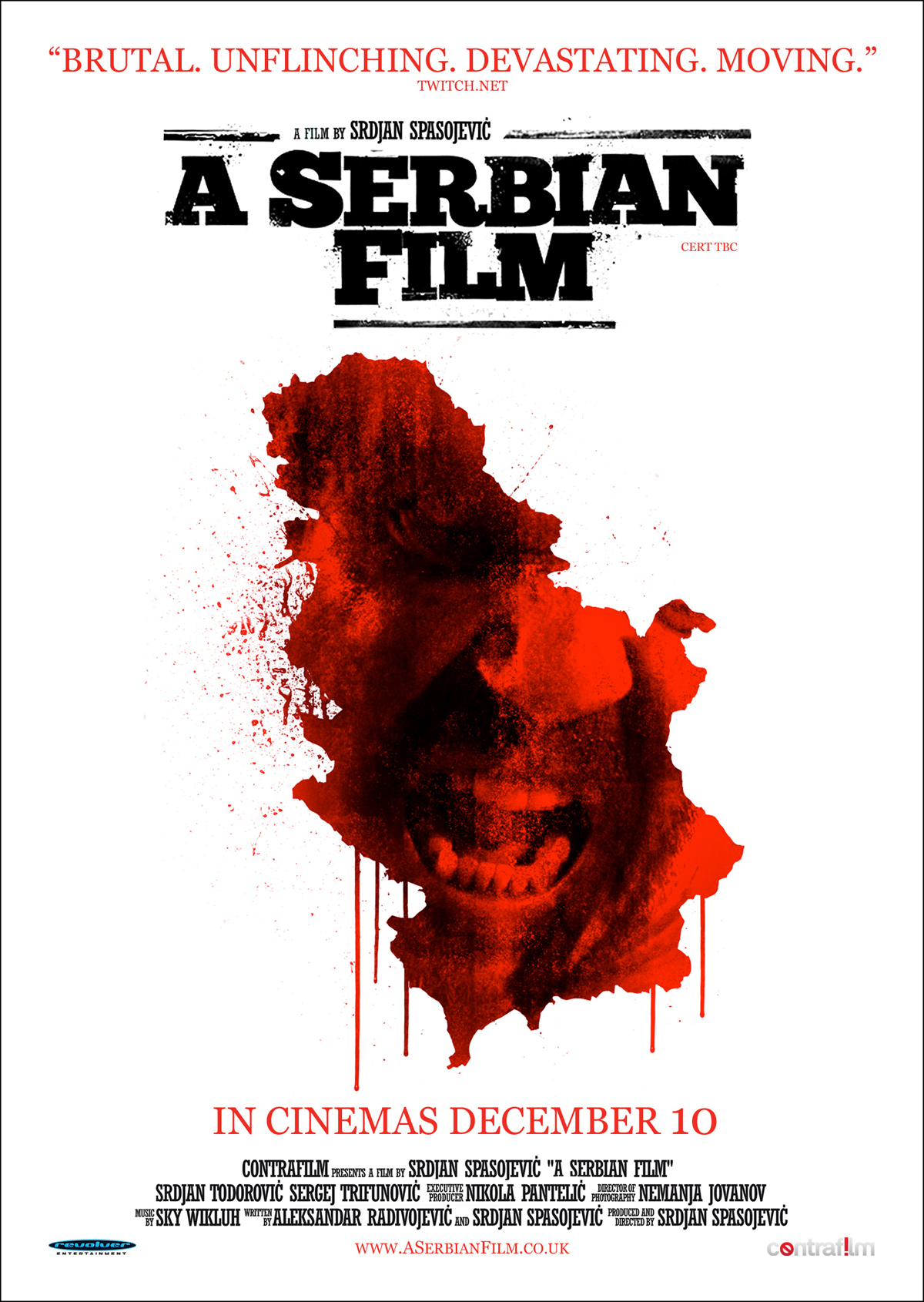
I cannot abide those who make extremely gruesome or horribly graphic works of art on the slender justification that “the world is horrible, we’re just a mirror for that horribleness.” This stand itself is not necessarily what bothers me. Certainly it’s facile and horribly inconsistent with the central philosophy of art as a concept, but that doesn’t make it reprehensible, just stupid. What does make it reprehensible is that those who say it often see themselves as rebels, boldly showing the world its darker side on the apparent assumption that we can’t see it perfectly well from here, thank you. But there is nothing of the noble rebel about their position. They see a holocaust and think themselves the allies, but no. They are the Vichy. When they bear witness to evil their first instinct is not to fight it but to collaborate with it. That is what makes them wicked. Not the cowardice itself, which is understandable even if it is not admirable, but the cowardice disguising itself as bravery through a flimsy facade that tries to escape detection by means of sheer bragadoccio. But no, there is nothing brave in it. If you see evil, fight it.
Subscribe to:
Posts (Atom)