
Friday, November 7, 2014

Thursday, November 6, 2014
The Talking Picture, Ep. 1 - You Are The Crowd
The first episode of my ill-fated but still theoretically ongoing video essay series, The Talking Picture.
Saturday, November 1, 2014
On the Ending of Inception

A few quick words on Inception, particularly its ending. Even today, I hear confusion from some people as to what the ending meant, or even frustration as to Christopher Nolan’s alleged failure to provide us with a hard-and-fast answer to the question of whether Leo ever did manage to reach the real world or if the entire end of the movie is just another dream.
First off, I’d like to say that the ending is perfectly timed. When the spinning top wobbles, the image cuts out before we get to see if it will continue wobbling and eventually fall or just right itself and carry on forever. This is reality vs. the dream world in a nutshell, and withholding the final verdict from us creates ambiguity.
But that’s precisely what those confused by the ending or particularly expressing frustration at it are missing: the ambiguity is the point. Leo doesn’t care anymore whether he’s in the real world. This level of reality is where he gets to be with his children. This level of reality is where he has a life. So even if it’s not entirely real (and who’s to say?), it’s the reality he will choose to live out.
This is the choice that all of us face to one extent or another. True, we could all be living in the Matrix, we could all be living out a lie and really just be brains in vats. But as far as I’m concerned, it doesn’t matter. As long as I can make a good life for myself here, it doesn’t matter whether it’s real or not. It’s where I live, and I will make the most of it.
Nolan really knows how to end a film, though. I think part of the reason he’s so universally acclaimed is because, psychologically, we as humans tend to remember the first and last items in a sequence better than anything in the middle. I imagine Nolan understands this and thus understands also the value of a good ending. He certainly puts a lot of effort into them. Sure, the ending of “TDKR” was lacklustre, but the ending of The Dark Knight is perfect. The endings of Batman Begins and Memento are terrific. The ending of “The Prestige,” well, your mileage may vary depending on how thoroughly you’ve thought out the mechanics of Hugh Jackman’s magic act. By the end of the film, I had thought about it and had already realized that the Hugh Jackman character had basically been drowning a replica of himself every night for the length of his entire performance run in a wonderfully grotesque metaphor for how he’d been tearing himself apart piece by piece after the death of his wife, so the final shot where we realize that the long rows of tanks each contain a dead Hugh Jackman didn’t have much revelatory value for me. Sure, it’s still a cool ending and the sudden cut to black, plunging the audience into darkness at the precise moment of maximum horror, is an effective technique (and consequently one that the ending leans on heavily).
On this spectrum, the ending of Inception falls toward the upper end. It makes an unavoidable misstep in teasing us, provoking an automatic and involuntary reaction just when it needs us to step back and look at the situation more analytically. At the same time, if you’re basically a sociopath like me, you’ll have no problem looking at it analytically. So for me, it works in a way that the ending of The Prestige doesn’t, but for someone who didn’t get Inception that would probably go the other way around.
On this spectrum, the ending of Inception falls toward the upper end. It makes an unavoidable misstep in teasing us, provoking an automatic and involuntary reaction just when it needs us to step back and look at the situation more analytically. At the same time, if you’re basically a sociopath like me, you’ll have no problem looking at it analytically. So for me, it works in a way that the ending of The Prestige doesn’t, but for someone who didn’t get Inception that would probably go the other way around.
Sunday, October 12, 2014
On Sports

I have noted in the past that fantasy league sports clubs are basically Dungeons and Dragons for the deeply closeted. This is true, but I would like to switch to actual flesh-and-blood sports and see how it stacks up to my personal passion, fiction. First, I think it is important to understand that the comparison is not so ludicrous as it would initially appear, and I say that for this reason - the winner is not really the point. Okay, it is important, but it is not the most important aspect of the game or else you could just look up the scores in the paper the next day and be content with that.
No, clearly watching the game is a crucial element, and I assert that is because of the drama. The minute twists and reversals, each of which could affect the outcome of the game as a whole, all stretched over multiple hours. Now I hope you see what I mean when I say that the ending is not all that matters. Getting a play-by-play description of a football game rather than watching the real thing is like having the major plot points of a Game of Thrones episode dryly recounted to you in lieu of watching the actual episode.
But here is where I feel fiction enjoys a definite advantage over sports - the narrative of a football game is made up on the fly. Certainly I can appreciate the visceral appeal of watching a story that no one can spoil for you because no one knows the ending themselves. By the by, I suspect this is also why sports fans get so up in arms about steroid abuse and suchlike - it gives the advantage to one potential ending over another, making the product less spontaneous and hence less exciting.
Fiction, on the other hand, while less visceral and unpredictable, is at least a narrative that has been crafted by a professional writer, manifesting their intent in words, images, and what have you. Even when after a game the headline writers may brand the result a Cinderella Story or whatever else they managed to pick out from the catalog of cliches that day, it is a narrative that they as an author have imposed on the real life narrative. Giving significance to a narrative requires human input, and that is why I think fiction trumps sports every time.
On a related note, I find the whole premise of athletics - or at least the most basic athletics - questionable. We may find the Fastest Man Alive, but we have to remember that the word Man is the thing that is not like the others. No matter how fast we run, other animals can run faster. No matter how high we jump, other animals can jump higher. No matter how quickly Michael Phelps can swim, put him in the pool with a shark and he is going to get fucking eaten. Something that celebrates what actually sets us apart as a species would be a more appropriate celebration of our shared heritage as a world people. I will even settle for games that have rules and strategies like Basketball, Baseball, or yes, even Football.
Friday, June 6, 2014
On Story Climaxes

I was thinking about the Doctor Who Fiftieth Anniversary Special and how it manages to have a double climax. First, there is an emotional climax that resolves the story with the form-changing aliens which not only brings ten and eleven together but gives the War Doctor his sad determination to go on with his course of action, concluding with the two younger doctors resolving to do this thing that they know is abominable together so that no one of them would have to carry the burden alone. Only after that do we get the action climax which gives another emotional hit.
This got me thinking about other double climaxes, and the one that comes to mind most easily is Raiders of the Lost Ark. Indy has hit what we think is his lowest ebb when he and Marion are locked in the tomb with snakes by Beloq. This is his katabasis, but he rises like all good heroes and engages in a thrilling chase with the Nazis, at the end of which he gets the Ark. The movie could so easily have ended here. But it seems likely that the filmmakers thought they should give the audience more for their money, and so we get an even better climax, indeed the climax to end all climaxes. After all, no earthly climax can beat the wrath of God in terms of grandeur. The final climax, of course, is the Ark ceremony in which the hubris of the Nazis leads to the wrath of God horribly destroying them in a localized but vicious cataclysm.
But I do wonder which order is ideal in terms of multi-climaxes. Obviously, the two have to be different. The difference in Raiders is that the first climax is about what Indy does, demonstrating that he has done all a human can to recover the ark. The second climax humbles both the hero and the villains, showing that they are meddling with forces so much more massive than them that it is genuinely scarier than any number of cobras.
I do not know the answer to my own question of how to arrange double climaxes correctly. However, one of the things I was not all that wild about in The Avengers is that everyone but Tony Stark and Bruce Banner had finished their arcs by the time the actual battle began. The arcs of Widow, Hawkeye, Thor, Maria Hill, Nick Fury, and Cap had all finished, which meant that if you were following them and their struggles then the movie was over for you as soon as the first climax - the battle aboard the Helicarrier - was finished.
Though this does not tell us what we should do, it does constitute a nice little instruction on what not to do. Do not resolve the emotional arcs of your characters before the action climax, because then the action will seem hollow and token. It may well be hollow and token, but you must at least maintain the illusion.
Tuesday, April 15, 2014
On the False Bravery of Cynicism
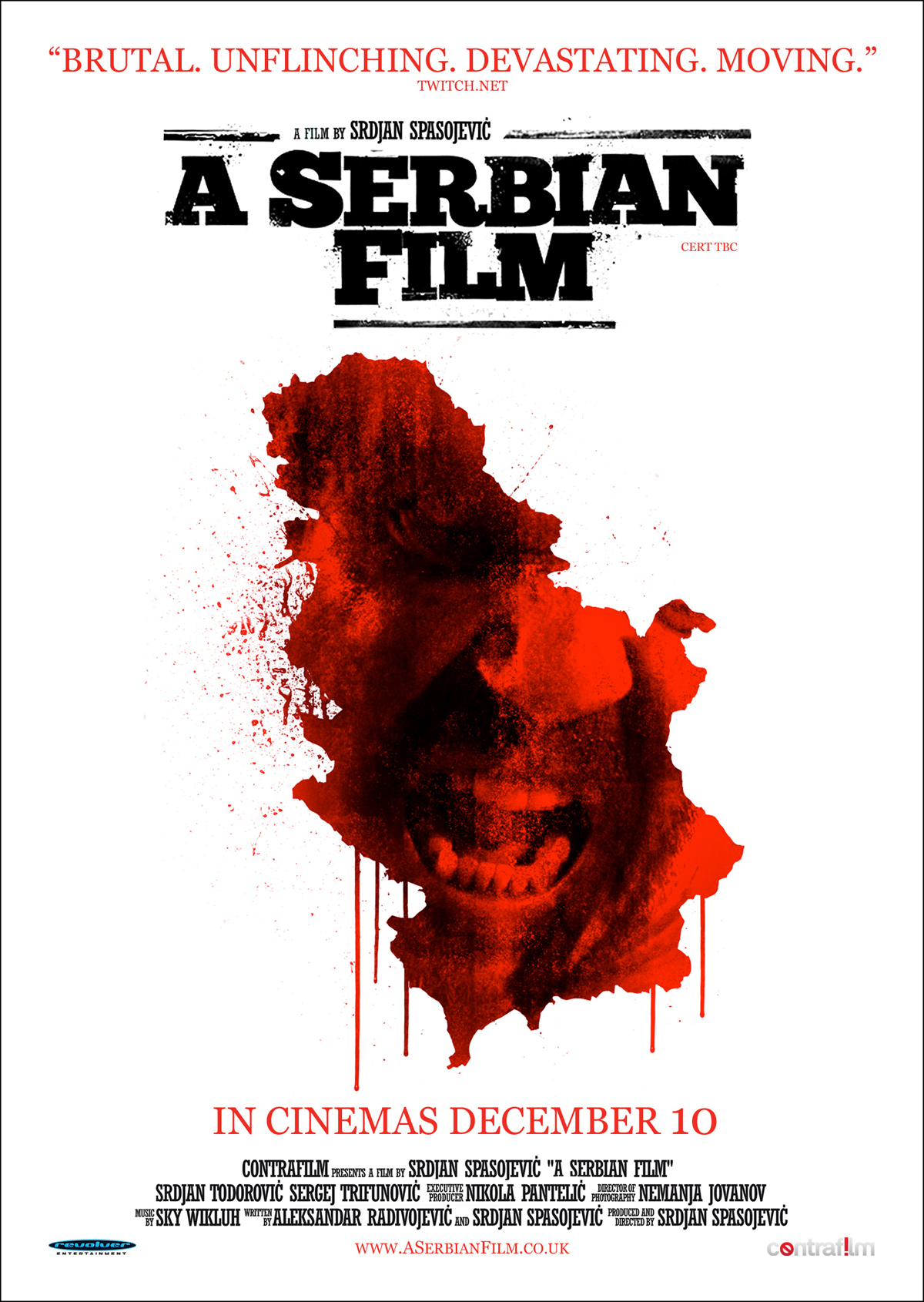
I cannot abide those who make extremely gruesome or horribly graphic works of art on the slender justification that “the world is horrible, we’re just a mirror for that horribleness.” This stand itself is not necessarily what bothers me. Certainly it’s facile and horribly inconsistent with the central philosophy of art as a concept, but that doesn’t make it reprehensible, just stupid. What does make it reprehensible is that those who say it often see themselves as rebels, boldly showing the world its darker side on the apparent assumption that we can’t see it perfectly well from here, thank you. But there is nothing of the noble rebel about their position. They see a holocaust and think themselves the allies, but no. They are the Vichy. When they bear witness to evil their first instinct is not to fight it but to collaborate with it. That is what makes them wicked. Not the cowardice itself, which is understandable even if it is not admirable, but the cowardice disguising itself as bravery through a flimsy facade that tries to escape detection by means of sheer bragadoccio. But no, there is nothing brave in it. If you see evil, fight it.
Subscribe to:
Posts (Atom)